
In 2026, supply chain leadership looks different than it did just a few years ago.
The conversation has shifted from innovation to execution. From adding tools to enforcing discipline. From siloed optimization to enterprise-wide governance.
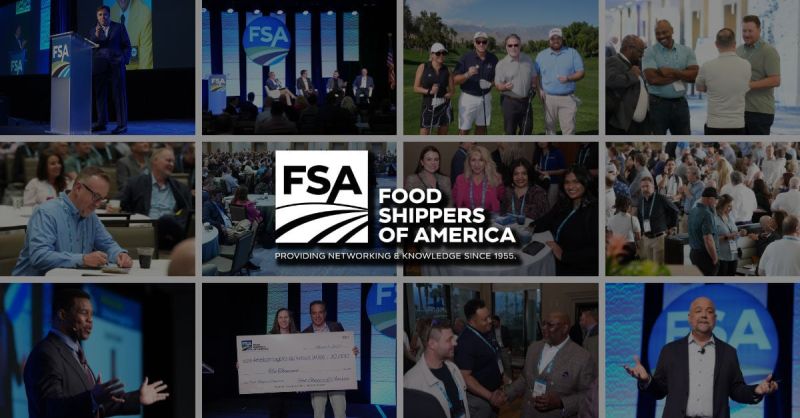
That shift is precisely why senior leaders across food and beverage manufacturing, retail, and logistics are gathering at the 70th Annual Conference of Food Shippers of America.
This is not simply another industry event. It is a strategic working session for operators responsible for cost control, service reliability, risk mitigation, and sustainable growth.
A Food Supply Chain Under Structural Pressure
Food supply chains operate under tighter constraints than almost any other sector.
Products are perishable. Service windows are narrow. Compliance requirements are strict. Retail expectations are unforgiving. Margins remain compressed.
At the same time, leaders are managing:
- Transportation volatility
- Labor shortages across distribution networks
- Increasing safety scrutiny
- Sustainability mandates tied to measurable outcomes
- Technology fragmentation across facilities
These forces have exposed a fundamental challenge: performance variability across execution layers.
Small inconsistencies compound quickly. A delayed trailer move creates warehouse congestion. Congestion drives labor inefficiency. Labor inefficiency increases cost. Cost pressure reduces flexibility. Service levels decline.
The modern food supply chain does not fail dramatically. It degrades gradually.
Leaders attending Food Shippers of America 2026 are focused on reversing that degradation through disciplined operating models.
Execution Has Overtaken Innovation as the Strategic Priority
Across the broader supply chain ecosystem, discussions often center on AI, robotics, and automation. Those innovations matter. But technology alone does not resolve fragmented execution.
At the executive level, the questions have become more practical:
How do we stabilize throughput across all facilities?
Why does performance vary site to site?
Where are hidden cost drivers emerging?
How do we protect service levels during peak season?
What is creating avoidable risk exposure?
These are governance questions.
Organizations that are outperforming in 2026 are not necessarily those with the most advanced tools. They are the ones with the most aligned execution systems.
Food Shippers of America provides a forum where leaders can explore how others are engineering that alignment at scale.
Yard Operations Are Moving Into the Executive Conversation
One of the most significant shifts heading into 2026 is the elevation of yard operations from a tactical function to an enterprise performance lever.
Transportation management has matured. Warehouse management has matured. The yard, however, often remains locally managed, reactive, and inconsistently standardized.
When the yard lacks discipline, the effects ripple outward:
- Missed appointments
- Carrier frustration and churn
- Trailer congestion
- Underutilized equipment
- Reactive labor adds
- Safety exposure
- Service inconsistency across regions
What happens in the yard directly impacts OTIF performance, warehouse productivity, transportation cost, and ESG outcomes.
Supply chain leaders are increasingly recognizing that the yard is not peripheral. It is a control point.
That realization is shaping the agenda at Food Shippers of America 2026.
Why Technology Alone Is Not Delivering Expected ROI
Over the past decade, many organizations invested heavily in visibility platforms and Yard Management Systems.
The intent was sound: digitize, track, optimize.
Yet the results have often fallen short of enterprise transformation.
Technology deployed without standardized processes, aligned workforce management, clear accountability, and integrated governance becomes a reporting tool rather than a performance engine.
Leaders are now asking a more sophisticated question:
How do we align people, process, assets, safety, sustainability, and technology under a unified operating framework?
Because return on investment is not driven by dashboards alone. It is driven by disciplined execution.
Food Shippers of America 2026 provides a space where these deeper operational conversations are happening openly among practitioners.
Sustainability Has Become Operational
Sustainability is no longer a communications strategy. It is an operational requirement.
Food shippers are being measured on emissions, idle time, asset utilization, and energy efficiency. Electrification of yard fleets and reduction of congestion are increasingly tied to measurable targets.
However, sustainability initiatives that are not supported by disciplined operating models often underperform.
Electrification requires infrastructure planning. Charging schedules must align with throughput. Workforce training must evolve. Equipment utilization must improve.
Sustainability, like cost control, depends on operational rigor.
This convergence of ESG and execution discipline is a central theme shaping discussions at the 70th Annual Conference of Food Shippers of America.
Peer Benchmarking in a Volatile Environment
In uncertain markets, leaders look to peers who are managing similar complexity.
Food Shippers of America has built a 70-year legacy as a practitioner-driven community where candid conversations occur across shippers, carriers, and logistics providers.
Executives attend to benchmark:
How are others reducing cost variability?
Which KPIs best predict service instability?
How are multi-site networks being standardized?
What governance models are holding up under peak demand?
In an environment defined by operational pressure, peer insight carries more credibility than marketing claims.
Why This Conference Matters Now
The competitive advantage gap in 2026 is widening.
Organizations that treat execution layers independently continue to experience cost creep, service inconsistency, and reactive decision-making.
Organizations that integrate execution layers under unified governance are driving:
- Predictable throughput
- Improved OTIF performance
- Better cost control
- Reduced safety exposure
- Measurable sustainability progress
Food Shippers of America 2026 sits at the center of that evolution for the food industry. It is not about theory.
It is about how disciplined execution across every layer of the supply chain, including the yard, becomes a strategic differentiator.
For supply chain leaders accountable for enterprise performance, these conversations are no longer optional. They are essential. That is why they are attending the 70th Annual Conference of Food Shippers of America.
%20(6).jpg)
%20(6).png)
.png)