
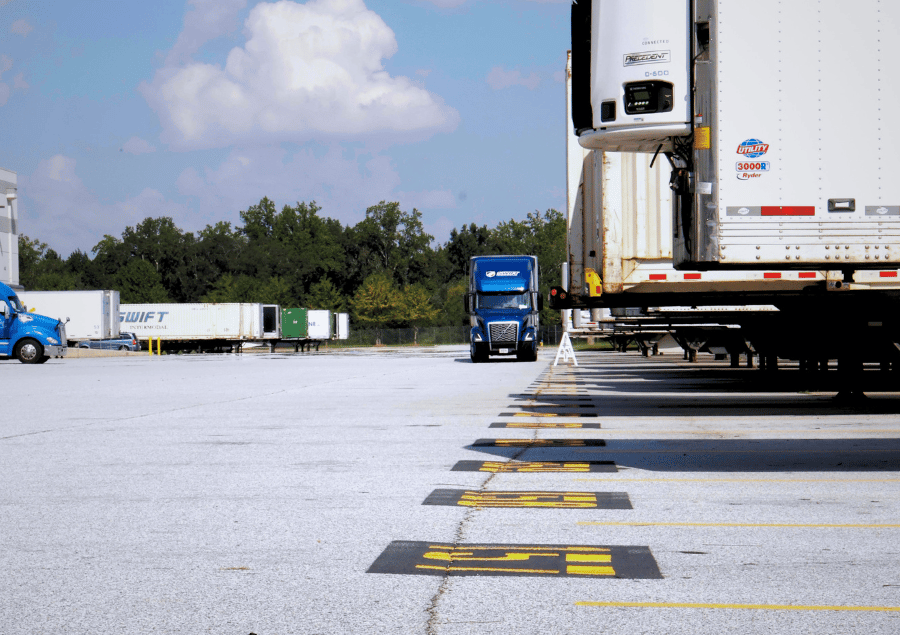
When people think of an “autonomous yard operation,” they picture a group of self-driving yard trucks zooming around the yard, moving trailers, taking them to dock doors, pulling them away to make room for the next one and repositioning equipment as priorities change.
There’s not always a human in that vision, because we’ve been trained on the idea that autonomous means the machines do everything themselves, without our help.
That’s not the case in the yard, the handoff point between two of the biggest parts of the supply chain: warehousing and transportation. As the ultimate middleman, the yard has to keep pace with both. That means being the traffic cop for inbound, outbound and staged freight. Trailers arrive, then have to be checked in, located, prioritized, moved to the right doors and moved again when loading or unloading is complete.
Changes or delays anywhere in that process can affect dock availability, warehouse priorities, and OTIF performance. A misstep in the yard can have an outsized impact on your warehouse or transportation network. Yet many facilities still rely on largely manual yard operations, inconsistent processes, and limited visibility into where trailers are or which move should come next. And all of this is compounded by driver shortages, worker safety and sustainability programs.
Enter the autonomous yard truck, which can execute many of those routine trailer moves with no driver behind the wheel. However, the truck only solves part of the equation: moving trailers around without needing a driver to do it. The rest of the yard operation still needs to run on coordinated decisions and operating expertise, neither of which can be replaced by adding a robot to the equation (at least not yet anyway).
Even with the technology in place, but the surrounding operation also has to be ready to tell those trucks what to do next. Put simply, full autonomy requires a standardized operating model that supports autonomous yard operations. Autonomous vehicles are part of that journey, of course, but even the smartest self-driving trucks need direction based on operational expertise and AI-powered optimization.
Autonomy won’t fix a poorly run yard
Companies sometimes assume they can layer technology on top of a poorly run operation and sit back and watch the magic happen. It rarely works that way, and the yard is no exception. Autonomous yard trucks can take over repetitive trailer moves, but they can’t fix existing problems like poor trailer visibility, inconsistent processes and weak coordination between the gate, yard and dock.
If move priorities are inconsistent, handoffs vary from shift to shift, or the yard lacks a reliable way to decide what should happen next, autonomous equipment simply inherits those problems. All the AVs will do is wind up automating bad, inefficient processes. That’s why the next step is to standardize how the yard runs before handing more of it over to autonomous equipment.
The standardization mechanics vary from yard to yard, but the basic sequence is fairly constant:
- Build visibility into the operation. Understand how trailers, equipment, labor and workflows move through the yard today, how priorities get set, where delays occur and where visibility breaks down.
- Standardize execution. Make trailer moves, handoffs and priorities as consistent and repeatable as possible, eliminating unnecessary exceptions before introducing more automation.
- Connect and optimize yard decisions. A yard operating system like YMX OS brings real-time yard activity and operational data together so the operation can measure performance, anticipate disruptions and continuously improve how moves are prioritized and executed.
- Automate repeatable work. Start with routine, predictable moves where automation can add value without having to compensate for inconsistent processes or poor information.
- Move toward autonomy. Once standardized processes, reliable data and centralized orchestration are in place, autonomous yard trucks can operate as an integrated part of the larger yard system.
The goal here should not be to just drop a bunch of autonomous trucks into the yard on day one. Start with a few moves that make sense, get your operation used to working with the technology and use those early results to decide what comes next.
Making autonomy pay off across the yard
Once everyone understands that the trucks aren’t running the yard by themselves, autonomy starts to pay off in some pretty visible ways. Fewer unnecessary trailer moves and less idle time mean fewer wasted trips and better use of the equipment already in the yard, for example, while better coordination between the gate, yard and dock cuts down on congestion that builds when one part of the operation is out of sync.
The capacity equation also changes since the yard can now handle more volume without automatically having to add more people or equipment. This brings us back to that original picture of autonomous trucks moving around the yard on their own. They may be doing the driving, but they’re still following the priorities, processes, and decisions behind the operation.
The trucks execute the moves. The yard still has to know what needs to happen next.
Your next read: How AI and digital twins are transforming yard operations and warehouse execution
%20(6)-1.jpg)