
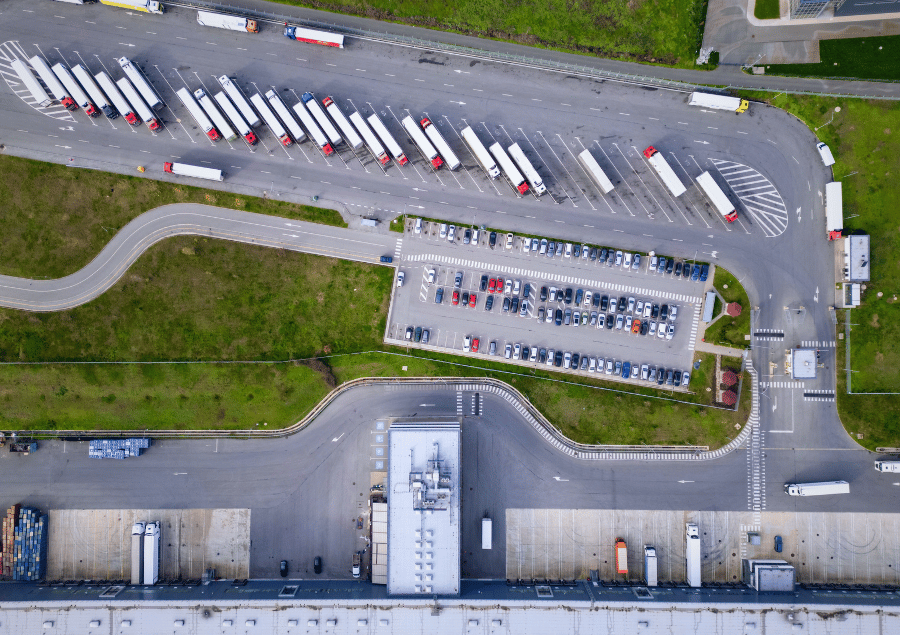
Picture this: A trailer enters the yard carrying pallets of fast-moving inventory that pickers in the warehouse will use to fill orders.
There are no available dock doors as receiving teams are already unloading trailers that arrived earlier in the day. And another truck pulls up to the gate waiting to drop off their load. At a busy DC, this scenario happens again and again across multiple shifts every day.
Getting all of those trailers where they need to be is a job in and of itself, and it’s known as trailer spotting. The mechanics are simple: yard terminal tractors move and reposition trailers between parking areas, staging locations and dock doors, so over-the-road drivers don’t have to perform these activities every trip through the yard. Done properly, trailer spotting keeps the entire operation moving. Trailers get to the dock when they’re needed, doors stay productive, and drivers can drop one load, hook up to another trailer, and get back on the road.
When it’s done poorly, spotting consumes a lot of time and money. The problems can start with something as simple as one trailer parked in the wrong place, an extra trip across the yard or a long wait for a spotter. Unloading falls behind, drivers wait longer, and detention charges start to add up. Meanwhile, the inventory inside sits idle instead of getting into the warehouse.
Where yard inefficiency is hiding
Organizations spend millions or even billions of dollars on their warehousing and transportation operations. Most don’t even flinch when it comes time to buy new equipment, software, hardware, and automation for these two nodes of the supply chain. Most of that investment goes to managing the flow of their goods and materials inside their facilities (e.g., a manufacturing plant or a distribution center of finished or semi-finished goods) or managing the movement of goods via dedicated or contracted freight transport.
The yard is often left out as those investments are allocated. Even though it may be physically larger than the facility it supports, it typically gets only a fraction of the investments spent on warehousing and transportation. The assumption is that yard improvements won’t produce enough savings to make a meaningful difference on the profit and loss statement.
That’s a pretty expensive assumption. Trailer spotting is one place where those hidden costs start to pile up. Every unnecessary trip across the yard consumes a driver’s time and equipment hours, and each trailer that gets to the dock late leaves pickers and equipment waiting around for the inventory to arrive. Multiply those delays across hundreds of trailer moves and multiple shifts, and this relatively minor yard expense adds up quickly.
From trailer delay to missed delivery
In manufacturing, co-packing and distribution operations, one delayed trailer or container impacts production schedules, customer shipments and on-time, in-full (OTIF) performance. Then the bigger problems start:
- Production falls behind. Late raw materials or components can disrupt attainment, schedule adherence, and future production plans.
- Distribution centers miss receiving windows. Finished goods stuck in the yard can leave the DC short on inventory for customer orders or time-sensitive builds.
- Perishable goods spoil or lose shelf life. Longer dwell times increase the risk of temperature excursions, rejected loads, and discarded product.
- Customer shipments take a direct OTIF hit. A delayed inbound trailer can force the DC to cut items from an outbound shipment, especially in just-in-time environments with little recovery time.
- Transportation costs climb. Waiting drivers can trigger detention charges, missed appointments, and expedited freight costs.
- Labor costs increase. Warehouse employees wait around for the product to arrive, then have to work overtime to get it unloaded and back on schedule.
By this point, the consequences have rippled through the rest of the operation. Production schedules slip, customer orders go out short, and service failures can put future business at risk, all because one trailer didn’t get where it needed to go on time.
Metrics that expose trailer spotting costs
Yard spotting may account for a relatively small piece of total supply chain spending, but the right metrics can tell companies a lot about how well the operation is performing and where they’re losing time or money. Every operation will have different targets for these KPIs, but companies can use these measurements to track productivity and performance over time:
- Safety performance can include total recordable incident rate (TRIR), telematics and camera data that identify unsafe driving or operating practices.
- Moves per operator per hour measures yard operator productivity.
- Move dwell time tracks how long trailer moves take.
- Move acceptance time measures how quickly operators accept requested moves.
- Carrier and trailer turn time tracks how long those assets spend at the facility. Depending on the operation, turn time can have a substantial impact on the flow of materials through both the yard and the building.
- Equipment uptime measures how often yard equipment is available for use. Equipment that spends too much time out of service can force the company to add more equipment to keep the operation running.
You can also track driver and trailer turn times from arrival through departure (i.e., ingate and outgate operations). Those numbers can give shippers something concrete to take into rate discussions with carriers and help strengthen their shipper-of-choice position.
Building a better trailer spotting operation
Good trailer spotting starts with the people on the ground. Managers need to staff each shift for the forecasted workload, drivers need to follow safe driving practices and fleet maintenance teams need to keep the equipment running.
Customer needs also change. Seasonal peaks increase volume, production schedules shift and some days simply demand more from the yard than others. At YMX Logistics, we adjust staffing, equipment and coverage around those changes. The goal is simple: get every trailer where it needs to go, when it needs to get there.
Your next read: What Are Spotters and Why Spotting Services Are Critical for Your Logistics Operations at Distribution Centers and Manufacturing Facilities