
%20(8).jpg)
Every year, supply chain leaders enter peak season with a predictable pattern. Demand accelerates, transportation networks tighten, and distribution centers and plants face intense pressure to move more freight with greater speed and accuracy. While most organizations focus their attention on warehouse labor, carrier availability, and outbound performance, the earliest signs of peak season stress appear in a place that has historically received the least strategic attention. The yard.
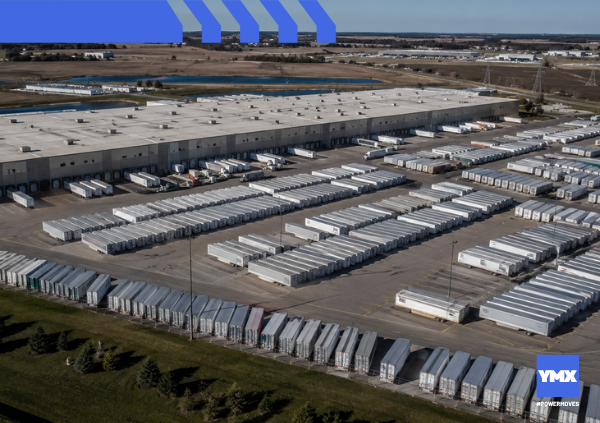
The yard is the first touchpoint in the flow of goods and often the first point of failure once peak activity begins. It is where trailers accumulate, where dwell times spiral, where dock schedules fall apart, and where teams are forced into reactive decision making. Peak season does not create the problems that occur inside the yard. It exposes the limitations of a system that has never been designed to absorb the intensity of modern volume surges.
This reality has led more organizations to reassess how yard operations are managed and why the yard has remained disconnected from broader supply chain strategy. Many teams continue to rely on tribal knowledge, manual communication, and siloed tools, even as the rest of the supply chain undergoes digital and operational transformation. The result is a yard that becomes a bottleneck precisely when the network needs it to perform at its strongest.
A Yard Operating System solves this gap. It provides the structure, visibility, and control required to keep the yard flowing during the most demanding weeks of the year. Instead of relying on improvisation, a Yard Operating System integrates people, process, and technology into a unified operating model that creates predictability at scale.
Why Peak Season Hurts Yard Operations
Peak season magnifies every inefficiency that normally goes unseen. When volume spikes, trailer inventories expand faster than teams can handle them. Visibility gaps appear. Dock sequencing breaks down. Parking space evaporates. And dispatchers, drivers, and supervisors struggle to keep pace with constant change. These challenges are not rooted in lack of effort. They come from an operating environment that is not equipped to scale.
Trailer velocity slows
During peak, the yard fills with trailers that sit longer than expected. Without real-time visibility into location, status, and priority, teams spend valuable hours searching for empties, reworking moves, or staging the wrong trailers. A trailer that might sit two hours on a normal day can sit six during peak because the system lacks the intelligence to prioritize moves based on evolving operational needs.
The dock loses its rhythm
Even the most sophisticated warehouse is dependent on the yard. When the wrong trailer sits at the door or when the inbound sequence is disrupted, dock productivity drops. Peak season requires precise alignment between what the warehouse expects and what the yard delivers. When that alignment fails, outbound commitments are threatened.
Parking capacity gets overwhelmed
Yard congestion is one of the earliest and most visible indicators of peak strain. Trailers fill every available space, blocking travel paths and limiting access to critical assets. What appears to be a capacity issue is often a planning issue caused by lack of insight into dwell trends, aging trailers, and upcoming appointment loads.
Labor becomes stretched and reactive
Drivers, dispatchers, and supervisors experience the sharpest pressure during peak. Without a consistent playbook or dynamic technology support, teams rely on radio calls, clipboards, and personal judgment to keep the yard moving. This creates variability, slows down velocity, and increases the likelihood of mistakes.
Safety risk increases
Rushed moves, congestion, pressure, and fatigue all combine to create unsafe conditions during peak. Most incidents stem not from a single poor decision but from an operating environment that lacks structure and predictability.
The root issue is clear. Yards break not because of peak season volume but because the operational system behind them is not built to scale.
How a Yard Operating System Solves Peak Season Challenges
A Yard Operating System changes the operating environment by integrating people, process, and technology into a single model that creates control, flow, and visibility across the yard. Rather than relying on incremental fixes, it redefines how yard operations function during peak and throughout the year.
Below are the foundational capabilities that strengthen performance.
Real-time visibility replaces guesswork
A Yard Operating System delivers an accurate, live view of every trailer on the yard. Teams know exactly what is available, what is ready, what is aging, and what is approaching priority thresholds. With real-time visibility into status, inventory, and movement, the yard shifts from reactive searching to proactive planning.
Intelligent move sequencing increases throughput
The yard moves faster when moves are prioritized correctly. A Yard Operating System uses data to determine which moves matter most and when they should be executed. This ensures that the right trailer is sent to the right dock at the right time while eliminating wasted travel, duplicate searches, and idle equipment.
Standardized processes create consistency across all shifts
Peak season exposes inconsistency across teams and shifts. A Yard Operating System establishes standard operating procedures for dispatch, drivers, and supervisors. These processes create uniformity, predictability, and a shared method of working that holds up under pressure.
Capacity insights prevent congestion before it happens
A Yard Operating System provides visibility into dwell trends, parking utilization, trailer mix, and inbound and outbound flows. Leaders can anticipate capacity risks and act before the operation slows. Instead of reacting to congestion, teams prevent it.
Safety becomes structured and embedded
A systematic yard framework reduces the risks associated with peak season. Controlled traffic patterns, reduced congestion, clearly defined roles, and well maintained equipment create an environment where safe behaviors are consistent and reinforced.
Yard, warehouse, and transportation operate as a single flow
The biggest performance gains come from synchronizing the yard with the warehouse and transportation network. A Yard Operating System provides a unified view of dock scheduling, inbound appointments, outbound commitments, and real-time yard activity. This removes friction between functions and creates a cohesive flow across the entire operation.
Peak Season Success Requires a System, Not More Effort
Peak season has always been difficult, and leaders often accept the chaos as unavoidable. But the challenges that appear during peak are not the result of unpredictable conditions. They are the result of operating without a structured system designed for scale, speed, and clarity.
A Yard Operating System transforms the yard from a bottleneck into a source of stability. It creates visibility where teams once had blind spots. It adds structure where inconsistency once slowed progress. It improves safety by reducing the chaos that produces risky behaviors. And it connects the yard to the broader operational ecosystem so that the entire network moves in sync.
Peak season does not reward the teams that work the hardest. It rewards the teams that are the best prepared. A Yard Operating System is the preparation that protects capacity, supports labor, accelerates throughput, and strengthens the reliability of the entire supply chain.
For organizations that want peak season to be a period of confidence rather than disruption, the answer is clear. The yard needs a system.
%20(19).png)
%20(10).jpeg)